City guides
Frankfurt
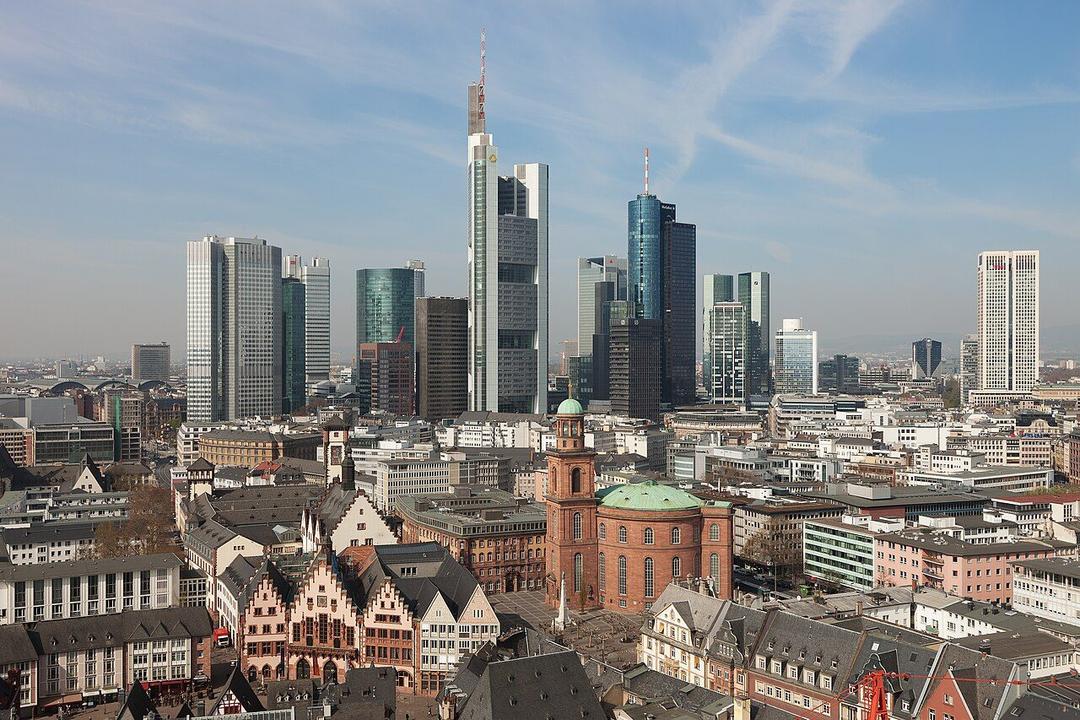
Frankfurt is a compact, practical city where glass skyscrapers stand next to a rebuilt old town square and a calm riverside full of museums. Most visitors pass through its huge airport, and many Iranians come to see family in the wider Frankfurt and Hesse region. Two or three days are enough for the city, and fast trains make easy day trips to Heidelberg and the Rhine valley.
Good for
- Visiting family
- Short stopovers
- Museums
- Christmas markets
- Day trips by train
- Older travellers
A good length: 3 days
Spend one day on the old town and river, one on museums or the zoo and park, and use any extra days for train trips out of the city.
Best months
May, June, July, September, December
Per person per day
- Budget
- US$85
- Mid-range
- US$170
- Comfort
- US$350
Per person per day, sharing a double room: a simple hotel bed, a bakery breakfast, one restaurant meal, a city day ticket and one museum. Hotel prices can triple during big trade fairs, so check the fair calendar.
Where to stay and spend time
Old Town and city centre (Altstadt, Innenstadt)
Stay or visitThe Römer square, the cathedral, the rebuilt old lanes and the Zeil shopping street are all within a few minutes' walk, and the river is right below.
For: First-timers, older travellers, short stays
Watch out: Hotels are pricey during trade fairs and the Christmas market season.
Open in mapSachsenhausen
Stay or visitAcross the river from the old town, with the Museum Embankment, green riverside paths for walks and cycling, and traditional cider taverns serving local food.
For: Families, museum lovers, relaxed evenings
Watch out: The small bar streets of Alt-Sachsenhausen are loud late on weekend nights.
Open in mapWestend and Bockenheim
Good baseLeafy, safe streets next to the Palmengarten and the university, with Leipziger Straße in Bockenheim offering everyday shops and some Persian restaurants. The U-Bahn reaches the centre in minutes.
For: Families, longer stays, Persian food lovers
Open in mapNordend and Bornheim
Good baseOld apartment blocks, cafes, bakeries and the long Berger Straße with shops and a weekly market feel like everyday Frankfurt, a short ride from the centre.
For: Couples, people who like local neighbourhoods
Watch out: Fewer hotels, mostly apartments, and a longer ride to the airport.
Open in mapBahnhofsviertel (main station area)
Good baseMany cheaper hotels and a huge choice of Turkish, Arab, Afghan and Asian food right next to the main station, with direct trains to the airport.
For: Budget travellers, early trains
Watch out: Open drug use on some streets, especially Taunusstraße and Niddastraße; not a good base with children or older relatives.
Open in mapEuropaviertel and the Messe
Good baseNew buildings, wide streets and the Skyline Plaza mall beside the trade fair grounds, with modern chain hotels and easy tram and U-Bahn links.
For: Business visitors, people who want modern hotels
Watch out: Feels empty in the evening, and prices jump during big fairs.
Open in map
Places worth your time
- SightsFree
Römerberg and the New Old Town
Altstadt · 1 hour
The historic square with the stepped-gable town hall, plus the lanes of half-timbered houses rebuilt in recent years between the square and the cathedral. Best in the morning before tour groups arrive.
- SightsFree
Frankfurt Cathedral (Kaiserdom)
Altstadt · 45 minutes
The red sandstone cathedral where emperors were once crowned. Entry is free; climbing the tower's many steps costs a small fee and gives a fine city view.
- Views
Main Tower
Innenstadt · 1 hour
The only skyscraper with a public open-air deck, about 200 metres up, reached by a fast lift. Tickets (about 9 EUR, or 20 EUR for a family of two adults and children, 2026) are sold at the tower's own ticket office, so no online booking is needed. Go on a clear late afternoon; it closes in storms.
- Museums
Städel Museum and the Museum Embankment
Sachsenhausen · 2 to 3 hours
The Städel holds 700 years of European painting; a dozen other museums line the same riverbank, from film to applied arts. Pick one or two and enjoy the riverside walk between them.
- With children
Senckenberg Natural History Museum
Westend and Bockenheim · 2 hours
One of Germany's biggest natural history museums, famous for its dinosaur skeletons. A favourite with children and a good choice on a rainy day.
- Parks
Palmengarten
Westend · 2 hours
A large botanical garden with tropical glasshouses, ponds, a playground and flat paths with benches, very pleasant for older visitors.
- With children
Frankfurt Zoo
Ostend · Half a day
A central, compact zoo with apes, big cats and a nocturnal house, right next to a U-Bahn stop. Easy half day with young children.
- MarketsFree
Kleinmarkthalle
Innenstadt · 45 minutes
A covered food market with fruit, spices, cheese and snack stalls. Closed on Sundays; Saturday mornings are the liveliest.
- ShoppingFree
Zeil and MyZeil
Innenstadt · 1 to 2 hours
Frankfurt's main pedestrian shopping street with department stores and the MyZeil mall with its striking glass funnel. Shops close on Sundays, so shop on Saturday.
- ViewsFree
Eiserner Steg and the Main riverbank
Altstadt and Sachsenhausen · 1 hour
The iron footbridge gives the classic skyline photo. Walk the flat, green riverside paths on either bank, especially at sunset.
- Museums
Goethe House
Innenstadt · 1 hour
The family home where the poet Goethe, an admirer of Hafez, was born, furnished as it was in his time, next to a museum of the Romantic era.
- MarketsFree
Römerberg Christmas market
Altstadt · 1 to 2 hours
From late November until just before Christmas the old town fills with stalls, lights and a big tree. Weekday afternoons are calmer than evenings and weekends.
- Day trips
Heidelberg
Day trip, south of Frankfurt · Full day
A romantic university town with a castle ruin above the river and a long old-town street, about an hour by train. A funicular climbs to the castle for those who prefer not to walk uphill.
- Day trips
Rhine valley and Rüdesheim
Day trip, west of Frankfurt · Full day
Vineyards, castles and river boats about 75 minutes away by regional train. Take the cable car above the vineyards and a boat along the river between April and October.
Getting around
From the airport
S-Bahn S8 or S9about 12 min
From the regional station under Terminal 1, suburban trains run every few minutes to the main station (Hauptbahnhof) and on under the city centre. Buy an RMV ticket for 'Frankfurt' at the machine before boarding; the machines take coins, notes and cards.
about 6.90 EUR (2026)
Long-distance trains (ICE and IC)about 10 min
If your family lives in another German city, high-speed trains leave from the separate long-distance station next to Terminal 1. Tickets bought early on the Deutsche Bahn site are much cheaper but need a card; at the station travel centre you can pay cash.
depends on destination; buy early for the cheapest fares
Taxi or ride appabout 25 min
Cream-coloured taxis wait outside both terminals and use a meter; most accept cards and all take cash. Uber and FreeNow also pick up at the airport but need a card in the app.
about 35 to 45 EUR to the centre (2026)
In the city
RMV tickets for Frankfurt
One ticket system covers U-Bahn, S-Bahn, trams and buses. In 2026 a single ride inside Frankfurt costs about 3.80 EUR and a day ticket about 7.75 EUR (the airport is a separate zone and costs more). A group day ticket for up to five people is the best deal for families. Machines at every station accept cash; the RMVgo app needs a card.
Deutschlandticket
A monthly pass for about 63 EUR (2026) covering all local buses, trams, U-Bahn, S-Bahn and regional trains in all of Germany, including to the airport, but not ICE or IC trains. It is a subscription you must cancel, and buying it needs a bank account or card, so it suits visitors whose relatives can buy it for them.
Taxis and ride apps
Taxis are cream-coloured with a roof sign and always metered; you can hail them or find them at ranks by stations and hotels. Most take cards, but say so before the ride, and all take cash. Uber and FreeNow work across the city with a card in the app. Prices are higher at night.
On foot
The centre is small and flat: the Römer, the cathedral, the Zeil and the river are 5 to 15 minutes apart, and the riverside paths are wide and level, ideal for older walkers and prams. Most U-Bahn and S-Bahn stations have lifts.
Food
Halal food: Easy. Turkish döner and grill shops are on almost every street, and the Bahnhofsviertel, especially Münchener Straße, has many Turkish, Arab and Afghan restaurants, halal butchers and grocers. Traditional German dishes often contain pork, so ask before ordering.
Persian food and community: Many Iranians live in the Frankfurt region. Persian restaurants are spread over Bockenheim (around Leipziger Straße), Nordend and Sachsenhausen rather than in one district, and some small shops sell Iranian rice, tea and spices.
- Bakeries are the cheapest breakfast: fresh rolls, pretzels and coffee for a few euros.
- Bottles and cans carry a deposit (Pfand); return them to the machine in any supermarket to get money back.
- Tap water is excellent, but restaurants usually serve bottled water only, so ask clearly for tap water.
- Leave about 5 to 10 percent tip by telling the waiter the rounded total when paying.
Money and phone
Cash: Bring euros. Germany still uses a lot of cash, and many bakeries, kiosks, small cafes and market stalls take cash only. Exchange at the Reisebank offices in the airport and at the main station, or at banks; compare the final amount you receive. Entering the EU with 10,000 EUR or more in cash must be declared at customs.
Cards: Iranian cards do not work. Cash covers almost everything in Frankfurt, including ticket machines. For train tickets booked online, hotels and ride apps, ask relatives in Germany to pay; some travellers also bring a prepaid Visa or Mastercard bought before the trip, which should be tested on day one.
SIM and internet: By law every German SIM must be checked against a photo ID before it works. The easiest way is an operator shop (Telekom, Vodafone, O2) or an electronics store counter where staff check your passport and activate the line on the spot; supermarket starter packs such as Aldi Talk need an online video check instead, which is harder to do alone, so a staffed shop is simpler. Prepaid packs cost roughly 10 to 20 EUR a month (2026).
What travellers say
Advice that travellers from many countries repeat, chosen for Iranian visitors.
- Almost all shops, including supermarkets, are closed on Sundays; stations and the airport have the few open ones.
- Buy the ticket before you board; there are no gates, but inspectors check often and fine on the spot.
- Check the trade fair calendar before booking; during big fairs hotels sell out and prices soar.
- Two or three days are enough for the city; use the rest for Heidelberg, the Rhine valley or Würzburg by train.
- Don't walk in the red bicycle lanes on pavements; cyclists come fast.
- Apartment buildings expect quiet after 22:00 and on Sundays, worth knowing if you stay with family.
- Ebbelwoi (cider) taverns in Sachsenhausen serve local dishes and apple juice too, and families are welcome.
- German plugs are type F (two round pins), the same as in Iran.
For Iranian travellers
- You need a Schengen visa; see our visa page. At your first entry the new EU Entry/Exit System takes fingerprints and a photo, so allow extra time at passport control.
- Iran's consulate in Frankfurt was closed by Germany in 2024; consular matters for Iranians in Germany go to the Iranian embassy in Berlin, so guard your passport carefully.
- Frankfurt's ticket machines and many shops take cash, so this is one of the easier European cities to manage without a foreign card.
- If you will travel around Germany to see relatives, ask them to buy you a Deutschlandticket for local and regional trains; it saves a lot.
- Shop for gifts and groceries on Saturday, because Sunday is almost fully closed.
- Persian speakers are common in the Frankfurt region, and many Iranian doctors, pharmacists and shopkeepers work here if you need help.
Stay safe
- Frankfurt is generally safe, but the streets around the main station (Bahnhofsviertel) have an open drug scene; cross it on the main roads and avoid side streets at night.
- Pickpockets work the main station, the Zeil and crowded trains; keep bags closed and wallets in front pockets.
- People with clipboards asking you to sign for a charity, sometimes pretending to be deaf, are a common trick to collect money or pick pockets.
- After dark, use the lit bridges and main paths along the river rather than empty stretches.
- Emergency number 112 for ambulance and fire; police 110.
Checked 7 November 2026